

The Tree of Life in Spiritual Practice
In Mormon Kabbalah, faith is an action. We deepen our personal relationship with God, allowing the light of Jesus Christ to transform us.
Neum and Kabbalah
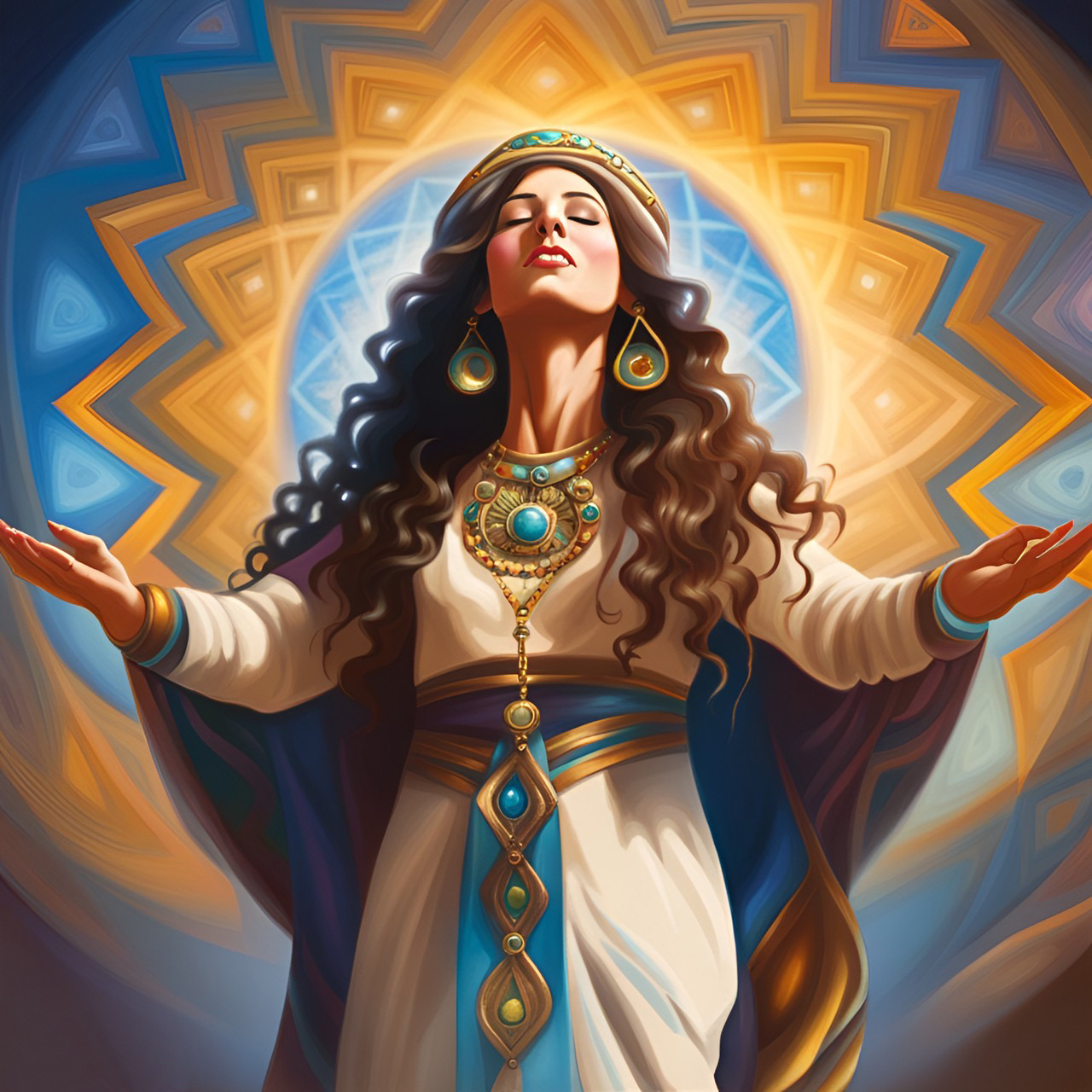
Behold, I am Neum, the Oracle, reader of the stars—I am she who pours out the libations for YHVH; I am she who still dances in prophecy when the daughters do sing, and the young men do play their harps and beat their drums.” -Neum 2:1-2 Neum is not a traditionally recognized Kabbalistic text in the sense of being a part of the core Kabbalistic literature like the Zohar, Sefer Yetzirah, or Bahir, but it certainly contains themes, imagery, and spiritual ideas that align closely with Kabbalistic principles. There are a few reasons why Neum can be seen as resonating with Kabbalistic thought, even if it isn’t classified as a Kabbalistic book. Let’s review a few of these reasons. The Mystical Relationship Between Israel and God One of the central motifs in Neum is the depiction of Israel as the bride of God, which is a key Kabbalistic concept. In Kabbalah, particularly in the writings of the Zohar, the relationship…

The Divine Feminine
Note: This article was originally posted May 12, 2018
“And it came to pass that the Spirit said unto me, Look! And I looked and beheld a tree; and it was like unto the tree which my father had seen; and the beauty thereof was far beyond, yea, exceeding of all beauty; and the whiteness thereof did exceed the whiteness of the driven snow.” -1 Nephi 3:46 RAV, 11:8 OPV
Within the Latter Day Saint movement, there are a number of theologies regarding the nature of God. In the Fellowship, and within Mormon Kabbalah, we accept all of them. It’s about how God reveals Himself, or Themselves, to us as individuals. We build, as it were, our own religions.

Sefirot, Chakra, and the Five Graces
At length Rabbi Simeon spake, and said: “As a lily amongst the thorns.” This word lily, what doth it mean and symbolize? It symbolizes the congregation of Israel.” -Zohar, the Lily
The Sefirot withing the Tree of Life represent various parts of the body. Alone, they are incomplete. Adding the chakra, energy points that run from the brain down to the spine, and parts of the body and adds to our understanding. In Mormon Kabbalah we have unique understanding of the chakra thanks to Apostle Victoria’s revelation from the Divine Feminine. She added to our understanding by introducing us to the Five Graces. Combining the traditional chakra with the new wisdom adds to our knowledge to begin to complete our understanding.

Hod
“Thou shalt not steal; blessed are the meek, for they shall inherit the earth.” –Book of the Law of the Lord 1:8/3 Nephi 5:52 RAV, 12:5 OPV
The 10 Sefirot (Hebrew for “emanations”) are the 10 attributes of God in Kabbalah, through which Ein Sof (the Everlasting name of God) reveals Himself/Themselves to humankind. There are a few different ways of using the Sefirot. Some Kabbalists study and grow from attribute to attribute, while others see them as an urim and thummim. As an urim and thummim, the right and left sides create a series of “lenses” for the natural eyes, while the center creates a series of “lenses” for the third or spiritual eye. Through this urim and thummim, God helps us see both the physical realm and the chain of higher metaphysical realms.

8 Threads of the Garments of the Priesthood
When one enters the ministry they are ordained to the priesthood. We are then, being clean, given the Garments of the Priesthood. In the Book of Remembrance, the Lord God sends Raphael to teach us the deeper symbolism of the Garments
Netzach
“Thou shalt not commit adultery; blessed are all they which do hunger and thirst after righteousness, for they shall be filled with the Holy Ghost.” –Book of the Law of the Lord 1:7/3 Nephi 5:53 RAV, 12:6 OPV
The 10 Sefirot (Hebrew for “emanations”) are the 10 attributes of God in Kabbalah, through which Ein Sof (the Everlasting name of God) reveals Himself/Themselves to humankind. There are a few different ways of using the Sefirot. Some Kabbalists study and grow from attribute to attribute, while others see them as an urim and thummim. As an urim and thummim, the right and left sides create a series of “lenses” for the natural eyes, while the center creates a series of “lenses” for the third or spiritual eye. Through this urim and thummim, God helps us see both the physical realm and the chain of higher metaphysical realms.

Tif’eret
“You shall not murder; blessed are the merciful: for they shall obtain mercy.” –Book of the Law of the Lord 1:6/3 Nephi 5:54 RAV, 12:7 OPV
The 10 Sefirot (Hebrew for “emanations”) are the 10 attributes of God in Kabbalah, through which Ein Sof (the Everlasting name of God) reveals Himself/Themselves to humankind. There are a few different ways of using the Sefirot. Some Kabbalists study and grow from attribute to attribute, while others see them as an urim and thummim. As an urim and thummim, the right and left sides create a series of “lenses” for the natural eyes, while the center creates a series of “lenses” for the third or spiritual eye. Through this urim and thummim, God helps us see both the physical realm and the chain of higher metaphysical realms.
Gevurah
“Honor thy father and thy mother; blessed are the pure in heart, for they shall see God.” –Book of the Law of the Lord 1:5/3 Nephi 5:55 RAV, 12:8 OPV
The 10 Sefirot (Hebrew for “emanations”) are the 10 attributes of God in Kabbalah, through which Ein Sof (the Everlasting name of God) reveals Himself/Themselves to humankind. There are a few different ways of using the Sefirot. Some Kabbalists study and grow from attribute to attribute, while others see them as an urim and thummim. As an urim and thummim, the right and left sides create a series of “lenses” for the natural eyes, while the center creates a series of “lenses” for the third or spiritual eye. Through this urim and thummim, God helps us see both the physical realm and the chain of higher metaphysical realms.

A Visit from the Divine Mother
Teaching received by Victoria Ramirez from the feminine half of Elohim; our Heavenly Mother, Shekinah: the Queen of Heaven on the morning of May 9, 2019. This revelation was voted on and sustained as canon for use in the Church of Jesus Christ in Christian Fellowship by the Assembly of Saints April 6, 2020.
I awoke from sleep at about 3:00 AM and found myself in the Presence of the Divine Mother. As I was passing through that semi-lucid state, in my third eye I saw beautiful, sparkling crystalline forms, quite translucent, around Her. As I gained consciousness She introduced me to the Five Divine Graces who were with Her. I was immediately filled with excitement and amazement, and also gratitude at receiving a new revelation.

Chesed
“Thou shalt love thy neighbor as thyself; blessed are the peacemakers, for they shall be called the children of God.” –Book of the Law of the Lord 1:4/3 Nephi 5:56 RAV, 12:9 OPV
The 10 Sefirot (Hebrew for “emanations”) are the 10 attributes of God in Kabbalah, through which Ein Sof (the Everlasting name of God) reveals Himself/Themselves to humankind. There are a few different ways of using the Sefirot. Some Kabbalists study and grow from attribute to attribute, while others see them as an urim and thummim. As an urim and thummim, the right and left sides create a series of “lenses” for the natural eyes, while the center creates a series of “lenses” for the third or spiritual eye. Through this urim and thummim, God helps us see both the physical realm and the chain of higher metaphysical realms.