

A Forgotten Prophetess Returns
Neum’s teachings also emphasize the dignity and worth of every human being. Because every person bears the Light of Christ, every person deserves compassion, respect, and an opportunity to grow.
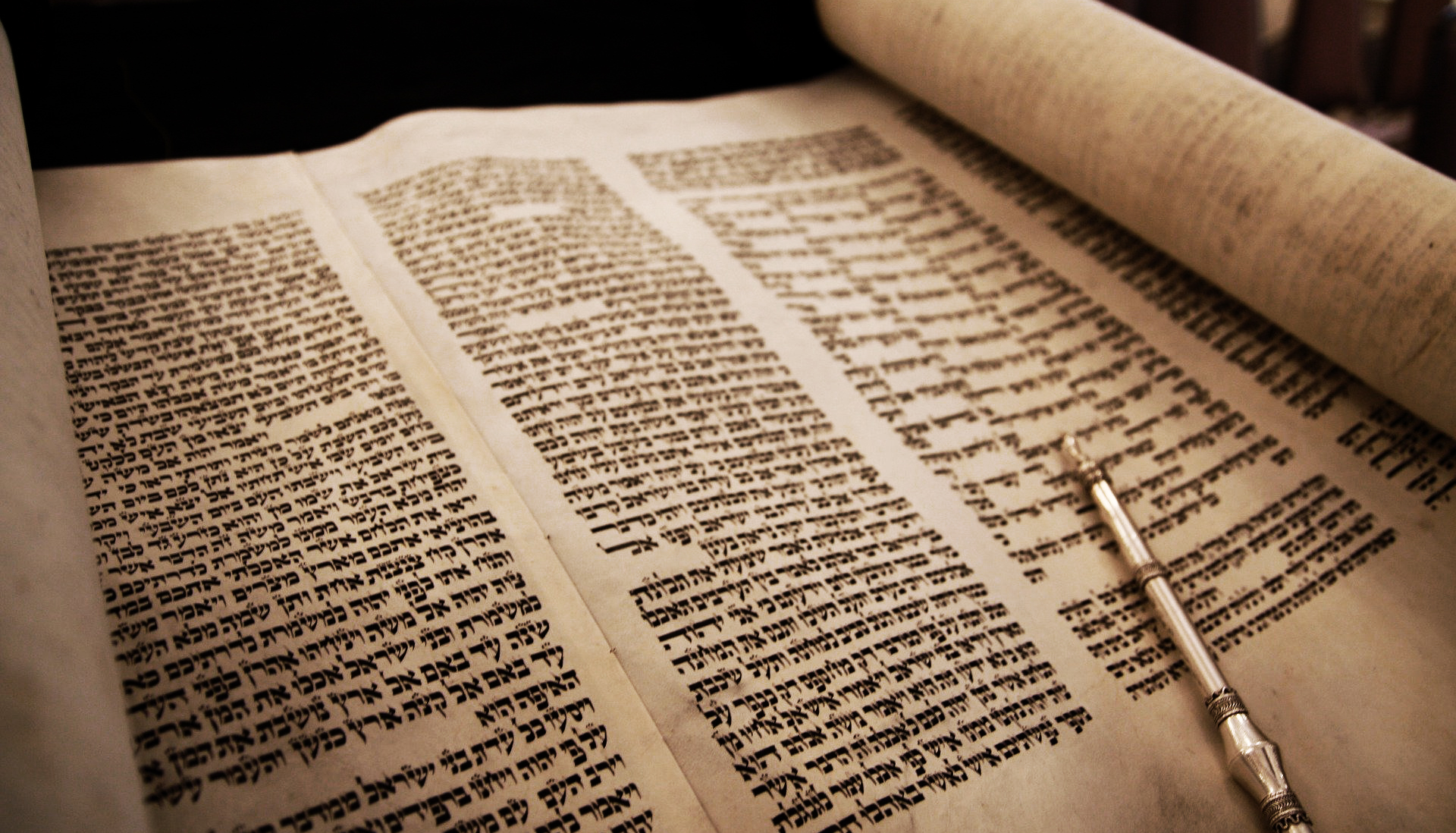
10 Teachings from the Torah of Moses (Plates of Brass Part I)
Here, I will present ten teachings that introduce some of the most important themes in this sacred text. It is my prayer that this will give readers a glimpse into how the Torah continues to speak to seekers today.

God Loves His LGBTQ Children
As to thy call, my Fellowship, to unite my people, I say: accept those that all others reject with hope, joy, and happiness. Worry not that there are those that judge others by the color of their skin, or their gender or sexual orientation, or in any way, for those who seek to hear my voice and heed my call must soften their hearts to these, my children. Homosexuality is neither a sin, nor a confusion, it is an eternal principle, for thus did I create them; and so too are my transgender children; therefore, exclude them not, hide them not, and forgo them not; for these are my children, and I say unto thee: bring these children unto me. Worry not what the world shall say unto thee for obeying my Law and my doctrine, but be thou obedient and thy tolerance shall be a light in the darkness; but know that this is my light, the very light of Christ, and the darkness shall comprehend it not; therefore, let my love and my light shine forth through the darkness that these, my children, shall no longer be lost, but be found in me and find a home in thee. This is my commandment to my Church and my Kingdom, yea even all my Saints that wish to fellowship in my name; so mote it be, Amen.” -Doctrines of the Saints 125:33-40
Editor’s note: This article contains topics of a more sensitive nature discussing sex and sexuality. Reader discretion is advised. This article was originally posted in July of 2019.
In the Church of Jesus Christ in Christian Fellowship we fully accept the LGBTQ community. We will marry and/or seal same-sex couples for all time and eternity. The Fellowship fully supports all marriages based on unity, love, and a committed relationship with God. We encourage everyone to follow the law of Christ to the best of their abilities. In the Fellowship of Christ, all unions and marriages may be sealed for all time and eternity.

10 Teachings from the Book of Mormon
For many people, the Book of Mormon can seem like a large and unfamiliar book filled with ancient names, journeys, sermons, and prophecies. Yet beneath its historical narratives lies a remarkably consistent set of teachings about God, humanity, and the purpose of life. Its prophets return again and again to a handful of foundational principles: faith in Jesus Christ, compassion for others, personal responsibility, spiritual growth, and the hope of redemption.

A Contrite and Humble Spirit
Note: This article was originally posted June 20, 2020.
“For thus saith the high and lofty One that inhabiteth eternity, whose name is Holy; I dwell in the high and holy place, with him also that is of a contrite and humble spirit, to revive the spirit of the humble, and to revive the heart of the contrite ones.” -Isaiah 57:15
As we read the above scripture from Isaiah, we heard God tell us that He dwells with those who have a humble and contrite spirit. But, what does it mean to have a contrite spirit?
Teshuvah in the Torah of Moses from the Plates of Brass
Teshuvah is not merely something we do, as human beings, re-aligning ourselves with God. It is as an act of love and mercy on God’s part.

5 Ideas from the Mormon Kabbalah Creation Story
Human beings have always asked the same big questions: Why are we here? Where did we come from? Why do we feel homesick for something we cannot quite remember?
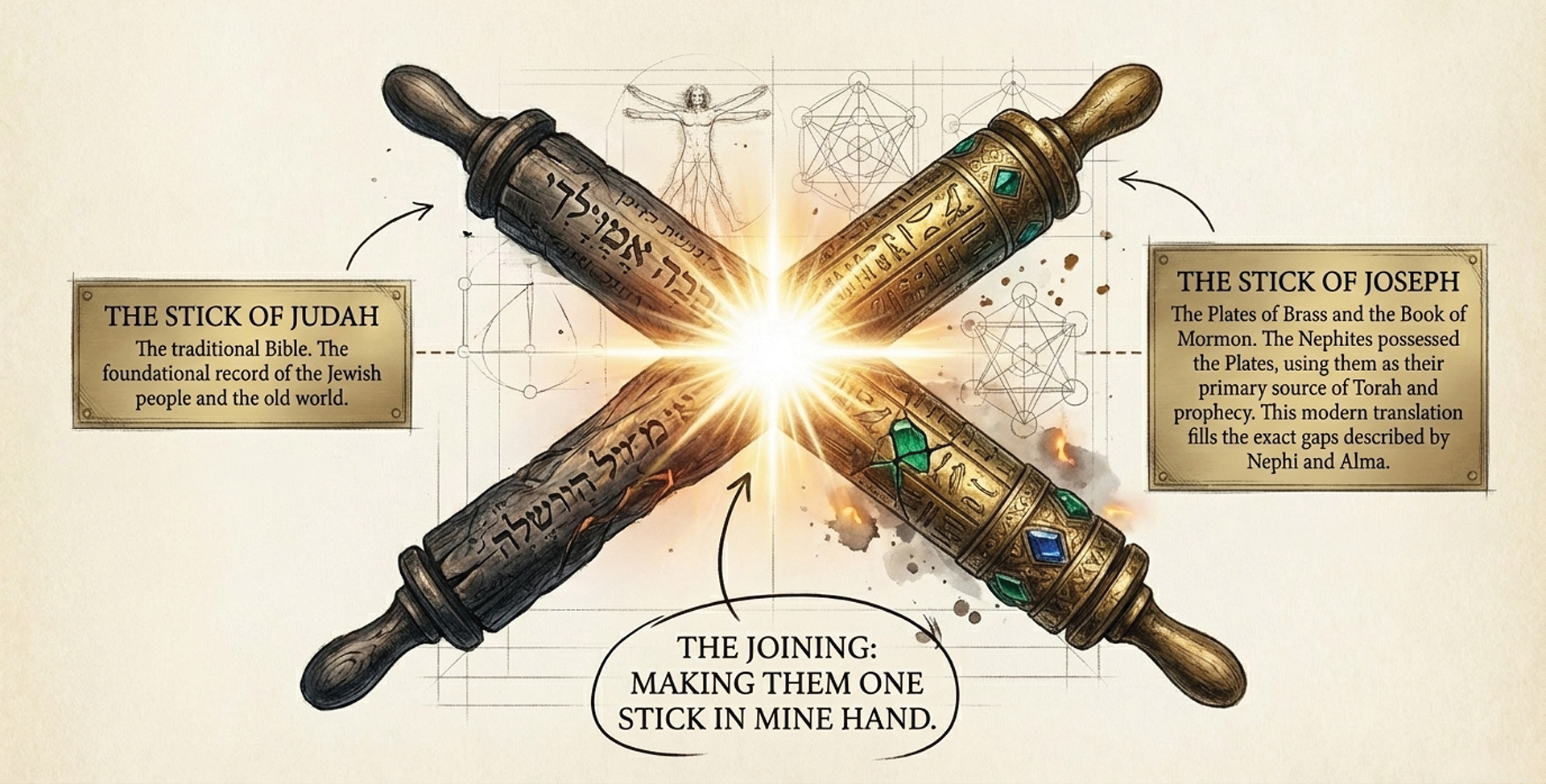
The Stick of Joseph and the Stick of Judah
The Book of Mormon speaks about an ancient record closely connected to the house of Israel: the Plates of Brass. Because these records were originally part of the Josephite tradition preserved in Jerusalem, they represent an important link to their scriptural heritage.

Why the Plates of Brass Now?
One of the recurring promises found in the Book of Mormon is that God preserves sacred knowledge and reveals it in His own time. The book teaches that many truths, teachings, and prophetic writings have been hidden throughout history. God’s knowledge will not be lost forever, but carefully preserved until the moment when they can bless future generations.

Book of the Law of the Lord/Plates of Brass Comparison
There are a number of differences between the Book of the Law of the Lord and the plates of brass translated as the Books of Moses or the Stick of Ephraim.

Fasting with Purpose and Power
“I give unto you a commandment that ye shall continue in prayer and fasting from this time forth.” -Doctrine and Covenants 85:21a CoC, 88:76 LdS
The meditation of prayer and listening to communicate with God is a key foundational practice of Mormon Kabbalah. Fasting has been a sacred practice carried out since time immemorial in nearly all cultures. Today, science tells us that fasting also has a number of benefits to our physical health, body and mind. Fasting can help detoxify the body and even contributes to the healing of some diseases.

Unconditional Love
“YHVH hath appeared of old unto me, saying: ‘Yea, I have loved thee with an everlasting love: therefore with loving kindness have I drawn thee.'” -Jeremiah 31:3
What is love? Is there a difference between God’s love and mankind’s ideas of love? Does God ever stop loving us? There is an idea out in the world that God will only love us “if.” What must we do then to earn God’s love?