The scriptures are laid before thee; yea, and all things denote there is a God, yea, even the earth and all things that are upon the face of it, yea, and its motion; yea, and also all the planets which move in their regular form do witness that there is a Supreme Creator.”
–Alma 16:54-55a [30:44c-d]
As we dive deeper into sacred geometry, it is easy to get lost in complicated diagrams or mysterious symbols, seeking hidden mathematical codes or esoteric knowledge that may or may not even really be there. Let’s take this topic to its most basic level: the practice of paying attention to the ways shape, proportion, number, space, and physical design can communicate spiritual ideas. This is particularly important when we talk about temples.
The Number 20: Expansion and Responsibility
For behold, thus saith the Lord God, I will give unto the children of men line upon line, precept upon precept, here a little and there a little: And blessed are those who hearken unto my precepts and lend an ear unto my counsel, for they shall learn wisdom.”
–2 Nephi 12:36-37 [28:30a-b]
The first dimension we encounter in Doctrines of the Saints 124 is twenty, as the proposed temple Holy of Holies is 20 × 20 × 20 cubits. In Hebrew gematria, the letter Kaf (כ) has the numerical value of 20. Gematria is a Jewish interpretive practice in which Hebrew letters correspond to numerical values, sometimes allowing interpreters to explore connections between words and concepts through their numerical relationships. Gematria has a particularly important place in Kabbalistic thought, although it has never been the only or even the primary method of Jewish interpretation.
כ Kaf = 20.
 The Hebrew alphabet gives us an interesting way to contemplate the number twenty. The shape of Kaf has traditionally been associated with the image of a hand or palm. In mystical reflection, this can invite ideas of capacity, receiving, holding, and potential. We should be careful here. These symbolic associations are not a single universally agreed-upon doctrine of Kabbalah. Rather, they provide a contemplative vocabulary through which Mormon Kabbalists can reflect on the architectural pattern. That said, think about the image of an open hand. A closed fist cannot receive very much, while an open hand is ready to receive. It can also give, it can bless, hold, and it can shape. That makes the number twenty an interesting symbol for spiritual capacity.
Another possible way of contemplating twenty is as two tens. The number ten has an important place in Kabbalistic thought because of the ten Sefirot, the traditional symbolic framework through which Kabbalah describes divine attributes or modes of divine manifestation. Again, this does not mean that ancient Israelites were secretly designing temples according to the later Kabbalistic system of the Sefirot, though the Plates of Brass do hint at this.
Let’s ask a different question: Can an older biblical number be contemplated through a later mystical framework? Twenty can be seen symbolically as an expansion or doubling of ten. Has previously mentioned, the Ten becomes twenty. One complete cycle becomes another, and what was foundational becomes expanded. This can make twenty a useful symbol for growth into greater capacity. And that idea has an important connection to discipleship. God does not merely ask us to receive light, God asks us to grow in our capacity to receive and share it.
Twenty and Spiritual Responsibility
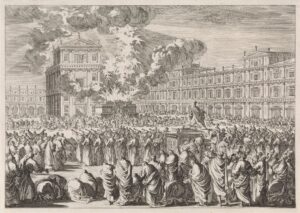 There is another fascinating biblical association with the number twenty. In ancient Israel, twenty appears in contexts involving military service, census, and responsibility (Numbers 1:3). The Hebrew Bible repeatedly distinguishes those who are twenty years old and upward in contexts of communal responsibility (Numbers 1:3).
There is also the story of Jacob. Jacob tells Laban that he has served him for twenty years (Exodus 30:14, 1 Chronicles 23:24, Ezra 3:8). Those years included labor, hardship, uncertainty, and the gradual establishment of his own household. Twenty here gives us another possible symbolic theme of maturity through preparation. Jacob did not become independent overnight, his journey involved years of service and difficulty. Those were years of learning and of waiting, then came the moment when he returned home.
These concepts make the number twenty particularly interesting when applied to a temple. A temple is no longer merely a place we go to, it represents a people becoming prepared to enter God’s presence. The architecture can therefore become a reminder that spiritual maturity requires preparation.
Twenty Boards and the Tabernacle
There is another biblical connection. The Tabernacle described in Exodus contained twenty boards on the north side and twenty boards on the south side (Exodus 26:18-20). These boards formed part of the structural framework of the sacred dwelling place. This is one reason the number twenty can be particularly interesting when contemplating temple architecture. It appears not only as an abstract number but within the physical structure of the biblical sanctuary.
The Tabernacle was a portable temple that moved with Israel. It was God’s dwelling place as He traveled with His people. This is a powerful idea for Mormon Kabbalah! The number twenty shows us that the purpose of sacred architecture is not simply to create beautiful buildings. It is to teach God’s people how to become a people in whom the Presence of God can dwell.
The Number 15: A Smaller Holy of Holies
Blow the ram’s horn on the day of our feasts during the new moon and during the full moon.”
–Psalm 81:3
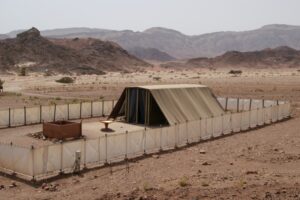
Just as the Biblical tabernacle had a smaller Holy of Holies, the revelation we were given provides a smaller scale for the present Holy of Holies in tabernacles and synagogues, 15 × 15 × 15 feet. This is especially meaningful because the form remains unchanged. The dimensions become smaller, yet the proportion remains the same. That is an important spiritual principle, the pattern remains even when the scale changes. A small temple can embody the same sacred geometry as a larger temple. This teaches us that a beginning disciple can participate in the same covenant journey as a mature disciple. Put another way, a seed and a tree share the same life, even though their size is radically different. This makes the fifteen-foot cube a powerful symbol for the principle that spiritual realities do not depend entirely upon physical magnitude.
Fifteen and the Hebrew Name of God
The number fifteen has a particularly interesting place in Hebrew tradition. Yod (י) has a numerical value of 10, while Heh (ה) has a value of 5. Together they total 15. The combination therefore resembles two letters from the divine name YHVH, and is the name in the Plates of Brass for the Father God and Mother Goddess, Yah (1 Moses 6:5-9). Because writing the divine name in certain contexts is treated with special reverence, Jewish convention commonly writes the number 15 as טו (Tet-Vav) rather than יה (Yod-Heh), avoiding a written form that resembles part of the divine name. This is a useful example of how numbers, letters, names, and reverence intersect in Jewish tradition.
For a Mormon Kabbalist, the number fifteen can therefore become an invitation from our Heavenly Parents to contemplate divine presence entering physical space. Again, we should distinguish historical fact from theological interpretation. The number fifteen does not automatically mean “God’s presence” every time it occurs in Scripture. Rather, its Hebrew associations give us another symbolic lens through which to meditate upon the temple.
Fifteen and the Moon
 The fifteenth day of a Hebrew lunar month is also significant in Jewish tradition. Passover begins on the 15th of Nisan, while Sukkot begins on the 15th of Tishri. The full moon occurs around the middle of the lunar month, and these festivals therefore take place at a time associated with fullness of lunar light. This creates a beautiful symbolic possibility, as the moon does not generate its own light. It receives and reflects light.
This makes the full moon a compelling image for discipleship. We do not create divine light, but we can receive it and reflect it. This fits naturally with the Mormon Kabbalistic understanding of human beings as participants in the movement of divine light from heaven into the world. The temple, likewise, can be understood as a place where people learn to receive divine light and carry it outward.
Fifteen Steps of Ascent
There one more connection we will look at here that many readers will find interesting. Psalm 120 through Psalm 134 consists of the fifteen Songs of Ascents. Jewish tradition connects these fifteen psalms with the fifteen steps associated with the Temple service. Whether one understands every detail of this tradition historically, liturgically, or symbolically, the imagery is powerful: Fifteen steps, fifteen songs, an ascent toward the presence of God. The number fifteen therefore provides an excellent metaphor for the spiritual journey. We do not normally leap from the valley directly into the Holy of Holies, we ascend step by step, Psalm by Psalm; lesson by lesson and covenant by covenant.
This is very close to the Mormon Kabbalistic concept of the Temple Path. Spiritual transformation is usually progressive:
- We learn
- We repent
- We receive
- We serve
- We ascend
- Having encountered God, we descend again to bless the world
- And, we repeat line upon line, precept upon precept.
The Book of Mormon and the Temple Path
This concept of ascent and encounter to meet God is not foreign to the Book of Mormon. Nephi built a temple, and Jacob later taught the people in the temple (2 Nephi 4:22-25 [5:16], Jacob 1:17 [1:17]). The Book of Mormon repeatedly places important moments of revelation and covenant within sacred settings. King Benjamin gathered his people at the temple to teach them about their relationship with God (Mosiah 1:18–19; 2:1–7). And perhaps most importantly, after His resurrection, Jesus Christ appeared to the Nephites in a temple setting. In 3 Nephi 11, the people were gathered at the temple when they heard a voice from heaven and encountered the risen Christ. The temple, therefore, becomes a meeting place. Not because God is confined to buildings, but because human beings need places where we intentionally stop, listen, remember, covenant, and encounter.
As we see throughout scripture, prophets are caught away in the Spirit to high mountains to converse with God (1 Moses 1:1, 1 Nephi 3:37-38 [11:1]). These visionary experiences impart divine mysteries, spiritual cleansing, and foundational understanding of the plan of redemption. These narrative structures parallel modern temple endowment covenants and ancient priestly rites. The Book of Mormon repeatedly teaches that the Lord does not dwell in unholy temples (see Mosiah 2:37; Alma 7:21; Alma 34:36). This shifts our attention from architecture toward character. The covenants deepen our connection with our God, and the rites teach us how to be more Christlike. As we move closer to building temples, the question we must ask is not simply, What does the temple look like? It is also, What kind of person am I becoming as I enter it?
The Number 30: Learning, Teaching, and Rising
Yeshua was about thirty years old when he began his public ministry.” –Luke 3:23
 The final dimension is Thirty. The Holy of Holies in the larger Fellowship temple is designed to be 30 × 30 × 30 feet. In Hebrew gematria, the letter Lamed (ל) has the numerical value of thirty. Lamed is particularly interesting because of its visual form. It rises above the other Hebrew letters. It reaches upward. This has made Lamed a powerful symbol for learning, teaching, aspiration, and spiritual elevation. The Hebrew root lamad (לָמַד) is a root verb that means both “to learn” and “to teach.” Temples are also associated with learning and teaching. This makes thirty a fitting number for a temple. The journey that begins with receiving eventually becomes a journey of teaching. We do not receive light merely to keep it. We receive light so that we can become light-bearers.
Thirty and Spiritual Maturity
The number thirty also has significant biblical associations with maturity and service. Joseph was thirty years old when he entered Pharaoh’s service (Genesis 41:46), and David was thirty when he became king (2 Samuel 5:4). The Levites began certain forms of Tabernacle service at thirty in Numbers 4. In the New Testament, Jesus begins His public ministry at approximately thirty years of age (Luke 3:23).
These examples should not be reduced to a rigid formula saying, “Thirty always means maturity.” Scripture does not work that mechanically. But collectively they make thirty an evocative biblical number for readiness, service, leadership, and mature responsibility. And this brings us back to the temple. The 15-foot cube is a beginning while the 20-cubit cube represents expansion. The 30-foot cube represents a further fullness of capacity and service. We might therefore contemplate a movement:
- 15 — Receive
- 20 — Grow
- 30 — Teach
These are not commandments hidden inside the numbers, they are invitations to meditate.
The Temple We Carry With Us
All of us, with faces unveiled, see as in a mirror the glory of the Lord; and we are being changed into his very image, from one degree of glory to the next, by God the Spirit.”
–2 Corinthians 3:18
As stated above, when we step back from the individual numbers, a larger pattern begins to emerge. Fifteen, twenty, and thirty can be contemplated as stages in a spiritual journey: invitation, expansion, and ascent. We can employ them as receiving, growing, and serving. What begins with entering the sacred space eventually leads us beyond the sacred space, carrying something of what we have received into the world.
 Numbers become more than data, they become lessons. Let’s combine the cubits from the Biblical measurements and the feet from our modern revelation. In Kabbalah, the number 10 is foundational. It represents the Ten Sefirot, the ten divine emanations or channels of energy through which our infinite Creator reveals His will, forms reality, and sustains the universe. A ten-foot cube can remind us of the creation. A 15-foot cube can remind us to come to God and receive. The 20-cubit cube can remind us that receiving divine light also requires preparation, responsibility, and the development of greater capacity. The 30-foot cube can point toward maturity, the willingness to learn, teach, lead, and serve. Together, they suggest that spiritual growth is not simply about getting closer to God for our own sake. It is about becoming capable of bringing something of God’s light into the lives of others.
Again and again, sacred space becomes the setting for revelation, and revelation is followed by transformation and action. That may be the deepest lesson of sacred geometry. The purpose is not ultimately to understand the geometry of the temple, but to allow the temple to help us understand ourselves. The cube can represent wholeness. The ordered spaces can remind us that spiritual growth has a pattern. The ascent can remind us that we are continually called upward. And the return to the world reminds us that whatever light we receive is meant to be shared.
Please do not let your journey stop with these three numbers. Take the time to discover the meaning of all the numbers and look for them in sacred architecture. We should therefore approach these interpretations with both curiosity and humility. We do not need to claim that every symbolic association is an ancient teaching or a revealed certainty, yet we can allow the patterns to become invitations to prayer, study, contemplation, and deeper discipleship.