One thing have I desired of the Lord, that will I seek after: that I may dwell in the house of the Lord all the days of my life, to behold the beauty of the Lord, and to enquire in his temple.”
–Psalm 27:4
In the first part of this series, we explored one of the central ideas of Mormon Kabbalah: the heavenly pattern that existed before temples were ever built upon the earth. This eternal pattern is what we understand as Adam Kadmon, the divine template according to which every soul was organized in the pre-mortal life. We also explored how sacred geometry serves as a language that reflects God’s order throughout creation, inviting us to see the universe not as random, but as purposeful, relational, and filled with divine meaning.
 As we continue our journey, we will turn now to one of the most fascinating themes in all of scripture: the progression of sacred temples in the Biblical narrative. We will look at the Tabernacle of Moses, Solomon’s Temple, Ezekiel’s visionary Temple, and the New Jerusalem. These are often studied as separate buildings that belong to different periods of biblical history. Mormon Kabbalah invites us to see something much larger. What if these temples are not isolated architectural achievements, but successive revelations of a single heavenly pattern? Together they tell the story of humanity’s eternal journey from our origin in the presence of God, through mortality and covenant, toward the restoration of all things in Jesus Christ.
Rather than viewing sacred architecture as static, in Mormon Kabbalah we see every temple as a living lesson. Each one expands our understanding of God’s relationship with humanity. Each reveals another aspect of the eternal Adam Kadmon, teaching us that the purpose of every temple is not merely to create sacred space, but to transform sacred people.
Heaven Reveals Patterns
Who serve unto the example and shadow of heavenly things, as Moses was admonished of God when he was about to make the tabernacle: for, See, saith he, that thou make all things according to the pattern shewed to thee in the mount.”
–Hebrew 8:5
 One of the remarkable consistencies throughout scripture is that God’s servants never invent sacred architecture. Moses does not design the Tabernacle from personal inspiration. Solomon does not simply commission an impressive building because Israel has become prosperous. Ezekiel does not draft blueprints based on his own imagination. Likewise, John’s vision of the New Jerusalem is not presented as human speculation. Instead, each receives a heavenly revelation. The pattern comes first, the construction follows.
This principle appears repeatedly throughout the Bible. Moses is instructed to build according to the pattern shown to him upon the mountain. Ezekiel is shown precise measurements by an angelic guide. John sees the Holy City descending from heaven rather than rising from human effort. For the Mormon Kabbalist, this is profoundly significant. It teaches that sacred geometry is not humanity reaching upward through religious ambition. It is heaven graciously revealing itself to humanity. Every temple becomes an earthly reflection of an eternal reality that already exists in the presence of God. The temple is therefore not an invention, it is a translation. Just as scripture translates heavenly truth into human language, temples translate heavenly order into physical space.
The Tabernacle of Moses: Humanity Learns to Draw Near
And there I will meet with thee, and I will commune with thee from above the mercy seat, from between the two cherubims which are upon the ark of the testimony, of all things which I will give thee in commandment unto the children of Israel.
–Exodus 25:22
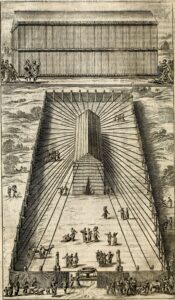 The Tabernacle was born in the wilderness (3 Moses 35, Exodus 25-31). Israel had recently escaped Egypt, and they possessed freedom but little spiritual formation. They needed more than Torah, they needed a way to encounter God’s presence while journeying toward the Promised Land. The Tabernacle answered this need. Unlike permanent temples of stone, the tabernacle was portable. It traveled wherever the people traveled. God’s presence was not confined to a city, but accompanied His covenant people through deserts, uncertainty, and change. This mobility carries deep symbolism.
Our first experience with God is rarely one of permanence. Faith begins as a pilgrimage, a journey into the wilderness. We learn to recognize God’s presence while moving through life rather than waiting until every question has been answered. The Tabernacle reflects this spiritual progression through its sacred geometry. The outer court welcomes the congregation, the Holy Place invites deeper communion, and the Holy of Holies represents the immediate presence of God. This movement is not intended to create exclusion, it teaches spiritual growth. Every disciple begins outside, every disciple is invited inward. The architecture itself tells the story of our conversion and our growth in the Grace of Jesus.
The Mormon Kabbalist sees this added layer within the Tabernacle, as the structure mirrors the soul itself. The outer court represents our physical existence, our ordinary relationships with work, family, and community. The Holy Place symbolizes the inner life, where revelation, prayer, wisdom, and covenant begin shaping our character. The Holy of Holies represents the deepest center of our eternal identity, where the Divine Presence dwells. In this understanding, Moses’ Tabernacle is not simply describing sacred architecture, it is describing us! Each human being carries within themselves the same movement from outward life toward inward communion with God. Adam Kadmon is not revealed merely in the overall structure of creation but within the architecture of every individual soul. The temple becomes a map of spiritual transformation, and that inward growth leads to outward changes.
Solomon’s Temple: Beauty as Worship
Now when Solomon had made an end of praying, the fire came down from heaven, and consumed the burnt offering and the sacrifices; and the glory of the Lord filled the house.”
–2 Chronicles 2:7
When Israel became established in the land, there were many temples, but the Tabernacle eventually gave way to the grand Temple of Solomon (1 Kings 6, 2 Chronicles 3). Much larger than its predecessor, Solomon’s Temple introduced an astonishing richness of symbolism. Gold covered the interior walls, and palm trees, flowers, cherubim, pomegranates, and lilies filled the carved decorations. The sea of bronze rested upon twelve oxen, and massive columns marked the entrance. Every measurement carried meaning. Modern readers sometimes assume these details were simply to impress Israel and their neighbors with ancient wealth, but Mormon Kabbalah suggests something deeper.
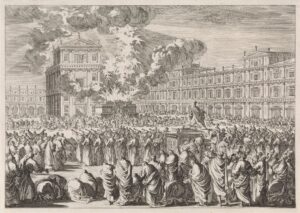 Creation itself had entered the sanctuary, as the Garden of Eden had become sacred architecture. The Temple reminded worshippers that redemption was never about escaping creation but restoring it. The abundance of fruit, trees, flowers, water, and light echoed the original harmony of Eden. Rather than separating heaven from earth, Solomon’s Temple portrayed their reunion. Its beauty reflected divine generosity, and its harmony reflected divine order. Its abundance reflected divine life, and beauty itself became an act of worship.
This vision challenges many modern assumptions. We often imagine holiness as sterile simplicity, yet scripture consistently presents God’s dwelling as vibrant, colorful, musical, and alive. The geometry of Solomon’s Temple celebrates this abundance. The repeated use of natural imagery teaches that creation itself participates in worship. Trees praise God, waters testify of Him, and light reveals Him. Even the proportions of sacred architecture participate in divine harmony! Within Mormon Kabbalah, this reflects Adam Kadmon once again. Human beings were never intended to dominate creation through exploitation. Rather, we were called to serve as gardeners, caretakers, and priests and priestesses within creation. The Temple becomes a meeting place where humanity fulfills its original vocation, to unite heaven and earth through loving stewardship.
Ezekiel’s Temple: Hope After Exile
And the glory of the Lord came into the house by the way of the gate whose prospect is toward the east. So the spirit took me up, and brought me into the inner court; and, behold, the glory of the Lord filled the house.”
–Ezekiel 43:4-5
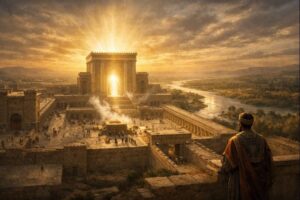 Ezekiel’s Temple differs dramatically from the previous temples (Ezekiel 40-48). Unlike Moses and Solomon, Ezekiel writes during national catastrophe. Jerusalem has fallen, the Temple lies in ruins, and the people live in exile. Many wonder whether God’s covenant has ended! Into this despair comes one of the most detailed architectural visions in Scripture. Interestingly, Ezekiel’s Temple was never fully constructed. Its primary purpose appears to be theological rather than architectural. It reveals hope. When everything familiar has collapsed, God reveals that His purposes remain intact. The measurements communicate stability, and the symmetry communicates order. The repeated dimensions proclaim that chaos will not have the final word. God still possesses a pattern.
For the Mormon Kabbalist, Ezekiel’s Temple teaches an enduring spiritual principle: Even when our lives appear broken beyond repair, the original pattern of Adam Kadmon has not been lost. The divine blueprint remains. Restoration is always possible because God remembers what we were created to become. This teaches us that repentance (teshuvah) is not beginning from nothing, but our return to the original design.
Perhaps the most beautiful feature of Ezekiel’s vision is not the building itself, but the river. Water flows from beneath the sanctuary. As it moves outward, it becomes deeper to heal deserts. It transforms the Dead Sea! Trees spring up along its banks, fruit appears every month, and the leaves become medicine. Notice the direction: Life flows outward. The Temple does not exist for itself, but to bless the world. This image profoundly shapes Mormon Kabbalah, as temples are never meant to become isolated spiritual fortresses. They exist so that divine life may overflow into neighborhoods, families, schools, workplaces, hospitals, and communities. This happens through us, through our actions and interactions with our families, friends, communities, and the world. If worship remains inside sacred walls, the Temple has misunderstood its purpose. The river, the waters of life, must flow.
The New Jerusalem: Humanity Becomes the Temple
The final temple described in the Bible surprises many readers, as John’s New Jerusalem contains no separate temple building. Instead, he writes:
And I saw no temple therein: for the Lord God Almighty and the Lamb are the temple of it.”
–Revelation 21:22
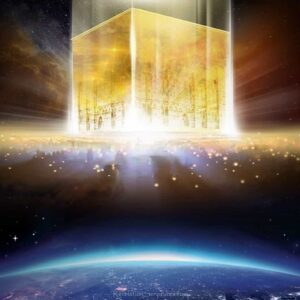 In the Revelation of St. John, we see three temples. The first temple is the body of Jesus Himself, Jesus is described with the physical attributes of the temple (Revelation 2:18). This mirrors the idea that we are the temples of God (1 Corinthians 3:16). The second is the measured temple of God and the altar (Revelation 11:1-2). The third is the temple of reality, the oneness of the Father and Son (Revelation 21:22). The entire city has become holy! This echoes Deuteronomy 6:4, that YHVH is Unity. The distinction between sacred space and ordinary space disappears, and God dwells openly among humanity. The city itself reflects sacred geometry, as it is perfectly measured. Its length, breadth, and height are all equal. Its gates welcome the nations, its foundations bear the names of the apostles, and its streets radiate divine light. Again we encounter the Garden. The Tree of Life returns, the river returns, healing returns as humanity’s story comes full circle. What was lost in Eden is restored in Jesus Christ.
For Mormon Kabbalah, the New Jerusalem represents the fulfillment of Adam Kadmon, Adam Elyon. Humanity has become what it was always intended to become: The image of God shines without distortion. Justice and mercy embrace, and the creation flourishes. Relationships are healed, death is overcome, the Divine Presence fills everything. This is why Mormon Kabbalah often speaks of the “restoration of all things” (Doctrines of the Saints 52:10/DaC 84:3b CofC, 86:10 CJCLdS), the restoration is far more expansive than recovering lost doctrines or ancient ordinances, it includes the healing of creation. It is a reconciliation of nations, a restoration of families, a renewal of communities, and the healing of the human heart. It is the fulfillment of the divine image within every soul. Adam Kadmon is no longer merely remembered, it is fully realized.
Temples as Progressive Revelation
Know ye not that ye are the temple of God, and that the Spirit of God dwelleth in you?”
–1 Corinthians 3:16
Seen together, these four temples reveal a remarkable progression. The Tabernacle teaches us that God journeys with His people, Solomon’s Temple reveals the beauty and abundance of creation restored, Ezekiel’s Temple proclaims hope in the midst of exile and promises healing that flows outward, and the New Jerusalem reveals the completion of God’s purposes when heaven and earth become one. Each temple is true, each builds upon the previous one. None abolishes the earlier revelation. Instead, every temple expands humanity’s understanding of God’s eternal design. This progressive unfolding mirrors our own spiritual lives: We begin as pilgrims, and we grow in wisdom. We experience seasons of exile and restoration, eventually discovering that God’s ultimate desire is not simply that we visit holy places. It is that His presence fills every aspect of our lives.
 What does all of this mean for us today? It means sacred geometry is not reserved for architects or scholars. It becomes practical discipleship, with every act of forgiveness aligning another stone within the Temple. Every meal shared with the hungry extends Ezekiel’s river. Every effort toward reconciliation strengthens the foundations of the New Jerusalem. Every child taught to love God and neighbor continues the work begun in Moses’ wilderness Tabernacle. Every garden planted, every community strengthened, every lonely person welcomed, every act of justice pursued becomes another expression of heaven’s geometry upon the earth. We discover that temples are not only places we enter, they are the realities we carry with us in the journey of our lives. The measurements of heaven gradually become the measurements of our hearts. As Adam Kadmon shines more clearly within us, we become living witnesses that God’s original design has never been abandoned.
The Temple is much larger than any single building, it is the eternal household of God. It is a creation where heaven continually reaches toward earth, and where humanity, transformed through Jesus Christ, becomes what it was always created to be. In the next part of this series, we will explore the relationship between the Garden of Eden, the Tree of Life, Zion, sacred mountains, and the cosmic temple, examining how Mormon Kabbalah understands all sacred space as participating in one great pattern that stretches from Creation to the Restoration and ultimately to the eternal Kingdom of God.