I want you to please take a step back from what you may have been told. I would like you to ask yourself: What if the Restoration was never meant to be simply the restoration of a church? What if Joseph Smith’s first vision was not only the beginning of a new religious movement, but an invitation, a doorway into a much older and deeper spiritual reality? With these questions in mind, imagine standing in your own version of the Sacred Grove. All of the noise of the world falls away. The arguments about religion, the inherited assumptions, the competing voices, and even your own doubts become quiet for a moment. Like Joesph, you may wrestle with the darkness for a bit. Then you realize something startling: The heavens were never closed! Perhaps what has been closed is our ability to perceive them.
This is one of the central invitations of Mormon Kabbalah. Rather than treating the Restoration as the recovery of doctrines, Mormon Kabbalah approaches it as a recovery of direct, personal relationship with the Divine. It asks us to look beneath familiar religious language and rediscover the mystical patterns that connect creation, revelation, covenant, priesthood, temple, scripture, and the human soul. For someone encountering Mormon Kabbalah for the first time, this can sound like an entirely new religious vocabulary. But beneath the Hebrew terms and mystical diagrams is a surprisingly simple idea: God wants to be known, not merely talked about. The Restoration, in this understanding, is an invitation to become a participant in divine reality rather than a spectator standing outside it.
The Restoration as a Shattering of the Veil
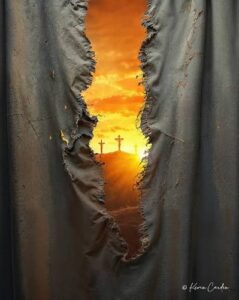 Joseph Smith’s story begins with a young man entering a grove of trees to ask God a question. This is an important detail because Joseph did not begin with a theological system. When he looked as the various theologies available to him, he was overwhelmed– and rightfully so! He started his search with a longing to know. Rather than looking to man, Joseph went directly to the Holy Bible. God place a Scripture on his heat, to James 1:5, and Jospeh wanted the wisdom promised. He went into the woods carrying confusion, competing religious claims, and a sincere desire for truth. What happened there became the foundation of the Restoration.
Mormon Kabbalah sees this pattern as more than historical background. The Sacred Grove is a spiritual archetype. Each of us has a grove, so to speak. It may not be a literal forest. It might be a quiet room early in the morning, a moment of prayer when words suddenly become unnecessary, an overwhelming experience of beauty, or a crisis that strips away everything superficial. It is the place where inherited beliefs can become personal knowledge. The Restoration then becomes something we experience rather than something we merely study.
This is where Kabbalah enters the conversation. The word Kabbalah is commonly associated with Jewish mysticism, but its basic meaning is often understood as receiving. In this sense, Kabbalah is not primarily a collection of secret information. It is a way of becoming receptive to divine light and to the sacred traditions that help us recognize it. Mormon Kabbalah approaches the Restoration as the recovery of those ancient patterns of reception, not for an organization, but for everyone seeking, everyone wanting to know, to believe. The goal is not to abandon scripture, Church, covenant, or Christ. It is to move deeper into them, to discover the mystical dimensions that may have been present all along.
The Lost Keys and the Plates of Brass
 One of the fascinating themes found in the Fellowship of Christ tradition is the idea that the Plates of Brass contain more than historical records. They represent a lost key to the Restoration. The Book of Mormon itself emphasizes the importance of these records. Lehi’s family understood that without them, future generations would lose knowledge of God and His commandments. The records preserved something essential. Mormon Kabbalah takes that idea seriously. What if some of the truths preserved in those ancient records were not merely historical teachings, but mysteries? principles concerning the nature of God, creation, humanity, revelation, priesthood, and the process by which the soul returns to divine fullness?
Within the Fellowship’s tradition, the Plates of Brass including records containing the writings associated with Moses, Zenos, Neum. Zenock, and Melchizedek. We approach these books as sacred revelation, mystical literature, and an invitation to deeper exploration. And the underlying idea is powerful: The Restoration still has layers waiting to be uncovered! That possibility changes the way we read scripture. Instead of asking only, “What does this verse tell me to believe?” we can also ask: “What is this verse trying to awaken in me?” That is a very different way of reading.
Three Words That Change the Way We See the Gospel
Mormon Kabbalah uses several Hebrew concepts to describe the spiritual journey. These words can initially feel intimidating, but their meaning becomes surprisingly practical once we see how they fit together.
Kabbalah: Receiving
 Kabbalah can be understood as the practice of receiving divine tradition and divine light (Ha’Or En Sof, the Light of Christ). We often imagine spirituality as something we do: pray harder, study more, serve more, become more disciplined. Those things matter, yet receiving requires another posture. It asks us to become still enough to listen. The Divine is not necessarily absent simply because we do not perceive the Divine. Sometimes our problem is not God’s silence but our inability to hear. Kabbalah, in this sense, is the cultivation of spiritual receptivity.
Teshuvah: The Way Back
Another essential word is Teshuvah. It is commonly translated as “repentance,” but its deeper sense is “return.” This changes the emotional character of repentance. If repentance means avoiding punishment, we approach God like frightened children trying not to get caught. But, if repentance means returning, we approach God like someone finding the road home. Teshuvah is not fundamentally about humiliation, it is about alignment. We wander, we become distracted. We allow ego, fear, resentment, or self-interest to shape our lives. Then something inside us remembers where we belong, and we turn around. That turning is Teshuvah.
Israel/Yashar-El: The Straight Path to God
The name Yashar-El evokes the idea of a straight (Yashar) or direct path toward God (El). It represents the soul moving toward divine alignment rather than endlessly circling around its own concerns. The goal is not perfection in the conventional sense, it is direction. A person can stumble and still be moving toward God. This is why Teshuvah and Yashar-El belong together: one describes the return, while the other describes the path.
The Three Dimensions of the Spiritual Path
 Mormon Kabbalah also describes the journey through three complementary dimensions: Mysticism, Theology, and Thaumaturgy. Mysticism is the experience of God. Theology is our attempt to understand what we are experiencing. Thaumaturgy is the practical application of spiritual power, miracle working, the work of bringing divine principles into the world. Think of them as three legs of a stool. Mysticism without theology can become confusing or purely subjective. Theology without mysticism can become intellectual and lifeless. And spiritual power without either can become focused on power itself rather than God. Together, they create a balanced spiritual path. The question becomes not simply, “What do I believe?” but “What have I experienced?” and “What am I doing with what I have received?”
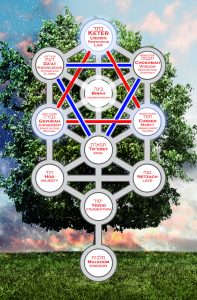 One of the most beautiful symbols in Kabbalistic thought is the Tree of Life, or Etz Chaim. For Mormon Kabbalah, the Tree can be understood as a kind of spiritual anatomy, a map of divine emanation and, at the same time, a map of the human being. The Tree describes how divine qualities move from the highest dimensions of reality into manifestation. It can also describe the journey by which human consciousness becomes increasingly aligned with God. This is where Mormon Kabbalah develops some distinctive interpretations. Within the Fellowship tradition, the pillars of the Tree are understood in a way that reverses some familiar Jewish and Hermetic associations. The Right Pillar is associated with the Feminine and Mercy, while the Left Pillar is associated with the Masculine and Severity.
The symbolism is not simply about biological gender, it describes complementary divine principles. The Feminine is connected with receiving, mercy, wisdom, and the Divine Mother. The Masculine is connected with giving, knowledge, severity, and the Divine Father. Neither principle is complete by itself, the spiritual life requires both. A world of unlimited giving without receptivity cannot sustain relationship. A world of receiving without giving becomes stagnant and self-centered. The Middle Pillar therefore becomes essential as it represents balance, harmony, atonement, and kingdom. In this framework, Yeshua (the Christ) stands at the center, bringing opposing forces into reconciliation. The Tree is then not merely a diagram, it is a story about relationship.
From Understanding to Knowing
 Perhaps one of the most distinctive ideas in this Restoration framework is what some call “the Great Switch.” At the upper reaches of the Tree, Da’at, Knowledge, is given a central role where Binah, Understanding, traditionally sits. At first glance, this may seem like a technical disagreement about a mystical diagram. However, it is much more important than that. There is a profound difference between understanding something about God and knowing God. You can read a thousand books about fire and still never feel its warmth. You can study the history of prayer without ever praying. You can memorize theological statements about revelation without ever receiving revelation. Da’at represents experiential knowing the Divine.
And that brings us directly back to Joseph Smith. Joseph’s Sacred Grove was not primarily a classroom, it was an encounter. He did not simply acquire information about God, he experienced God. The Mormon Kabbalistic seeker therefore asks for the same thing: not merely greater intellectual certainty, but direct experiential knowledge of the Divine. The Sacred Grove becomes something we can seek for ourselves. All of this is not to say that the setting of the Tree of Life in traditional Kabbalah is wrong, Mormon Kabbalah is just looking at the tree from a different perspective. Both have their place, both are acceptable to study. Mormon Kabbalah comes from the revelations I have recieved, and the teachings of the Plates of Brass. Jewish Kabbalah comes from the revelations Jewish Kabbalists have recieved as they pearcd the veil. God reviele Himself to us as we can best comprehend Him, therefore both are equally viable. .
Rediscovering the Divine Family
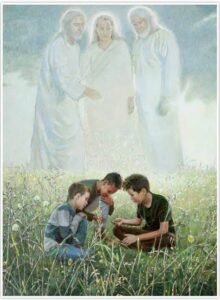 This experiential understanding also leads Mormon Kabbalah toward a richer vision of the God. Rather than viewing God exclusively through a single masculine image, the tradition recognizes a Divine Family. While there are many ways to understand God, the Fellowship and Mormon Kabbalah suggest an understanding that reflects:
- The Father, representing the Divine Masculine and Creator and Mother, representing the Divine Feminine and the Shikinah (the Divine Presence)
- The Son, Yeshua (Jesus), representing the Mediator and harmonizing Light.
- The Spirit, Ruach HaKodesh, representing the Holy Breath of prophecy and revelation.
The concept of Heavenly Parents is particularly important because it changes the way we understand humanity. If Genesis is to be believed, and we were created in the image of Divine Parents, then divine identity is not restricted to a single expression. Every person carries something sacred. This conviction naturally leads toward radical inclusion. The point then is not merely to create a more welcoming community, it is to recognize the divine image is present in every human being. By this logic, difference does not erase divine identity, rather, it reveals the extraordinary variety of creation.
Ubuntu and the Zion Principle
But mystical insight alone is not enough. If we encounter divine light and then return to lives dominated by selfishness, what have we really learned? This is where Mormon Kabbalah connects mystical experience with Tikkun Olam, the repairing of the world. Kabbalistic imagery speaks of vessels capable of receiving divine light. In the language of Mormon Kabbalah, our inner vessels (desires) can become clouded by egoism, by the constant insistence that reality should revolve around “me.” My needs, my recognition, my status. My fears, my group, my salvation. Egoism creates the illusion that we are separate from everyone else, but Christ calls us toward the opposite realization. The more our hearts are transformed, the more divine light can move through us rather than merely accumulating inside us. This is the movement from personal salvation toward cosmic repair.
 This is where the African concept of Ubuntu offers a surprisingly beautiful companion to Mormon Kabbalah. Ubuntu is often expressed through the idea: “I am because we are.” Consider how different that is from the modern instinct to define ourselves entirely as independent individuals. Ubuntu says my humanity is connected to yours. Your suffering diminishes me, your flourishing contributes to mine, and your dignity is connected to my dignity. This is the Zion ideal. Zion is not simply a place where everyone happens to agree, but a community in which separation begins to dissolve.
The Zion principle says that the spiritual journey ultimately has social consequences. If meditation makes me more self-absorbed, something has gone wrong. If mystical knowledge makes me arrogant, something has gone wrong. If theology makes me contemptuous of people who believe differently, something has gone wrong. The fruit of divine encounter should be greater love. That means the work of Tikkun Olam is practical. We repair the world through service, we unite through love. We proclaim through peace, then we assist through action. Mysticism eventually has to touch someone’s life.
The Seeker’s Toolkit
 So what does all of this look like in practice? Mormon Kabbalah is not intended to remain a collection of fascinating ideas. It offers practices designed to help the seeker become more receptive to divine reality. One example is Mormon meditation. Within this framework, priesthood temple signs and tokens can be understood not merely as symbolic elements of ritual, but as forms of sacred gesture, a mudras, combined with sacred words and intentions. The point is not to treat ritual as magic per say, but to recognize the body as part of spiritual practice. We often imagine prayer as something that happens inside our heads, but human beings are embodied creatures. Our hands, posture, breath, voice, clothing, and physical surroundings can all become reminders that we are participating in something sacred.
Another powerful symbol is the tallit, or Jewish prayer shawl. Within Restoration mysticism, wrapping oneself in the tallit can represent entering a sacred enclosure, a “little tent” if you will, and remembering the protective presence of the Shikina, the Divine Presence. There is something deeply human about this practice. Sometimes we need a physical reminder that we are safe enough to become still. The fabric around the shoulders becomes more than fabric. It becomes a boundary between ordinary distraction and sacred attention.
The tassels, or tzitzit, likewise serve as physical reminders of covenant and commandment. The blue thread recalls Israel’s identity and the call to remember God’s commandments. The body becomes a place of remembrance, the garment becomes a portable sanctuary, and the ordinary act of dressing becomes an opportunity to remember who we are.
Becoming Witnesses of the Restoration
 Ultimately, Mormon Kabbalah asks us to reconsider what it means to be a Restorational Saint. Perhaps the Restoration is not something that happened once in a grove of trees two centuries ago. Perhaps it is something that continues whenever a person seeks God sincerely, receives revelation, returns from separation, encounters divine light, and carries that light into the world. Joseph Smith’s Sacred Grove can become our Sacred Grove. The ancient Tree of Life can become a map of our own spiritual development. Teshuvah can become our way home. Da’at can become the movement from talking about God to knowing God. Christ can become the Middle Pillar, the harmonizing Light that teaches us how divine love transforms human relationships. Tikkun Olam can become the work that follows every genuine spiritual encounter.
This is the heart of the invitation. You are not merely being asked to believe that someone else experienced God, you are being invited to seek your own witness. You are not merely being asked to admire Zion from a distance, you are being invited to help build it. You are not merely being asked to study the mysteries, you are being asked to allow those mysteries to transform you. The Restoration, seen through the lens of Mormon Kabbalah, becomes an ongoing journey from separation toward union, from egoism toward love, from ignorance toward direct knowledge, and from brokenness toward repair.
The question is no longer simply, “Was the Restoration real?” A deeper question emerges: “What will I do with the light I have received?” Perhaps the answer begins in the simplest possible place: Find your grove, become still, open yourself to God. Return when you wander, receive the light, and then carry it outward. The ultimate purpose of mystical knowledge is not to make us feel special, but to guide us back to the God who created us. The light we receive was never meant to stop with us. It is meant to shine through us, for our families, our communities, our neighbors, our enemies, and eventually the whole creation. That is the movement from Kabbalah to Zion: from receiving to giving, awakening to service, and personal revelation, to cosmic repair. And perhaps this is what the Restoration has been inviting us toward all along.