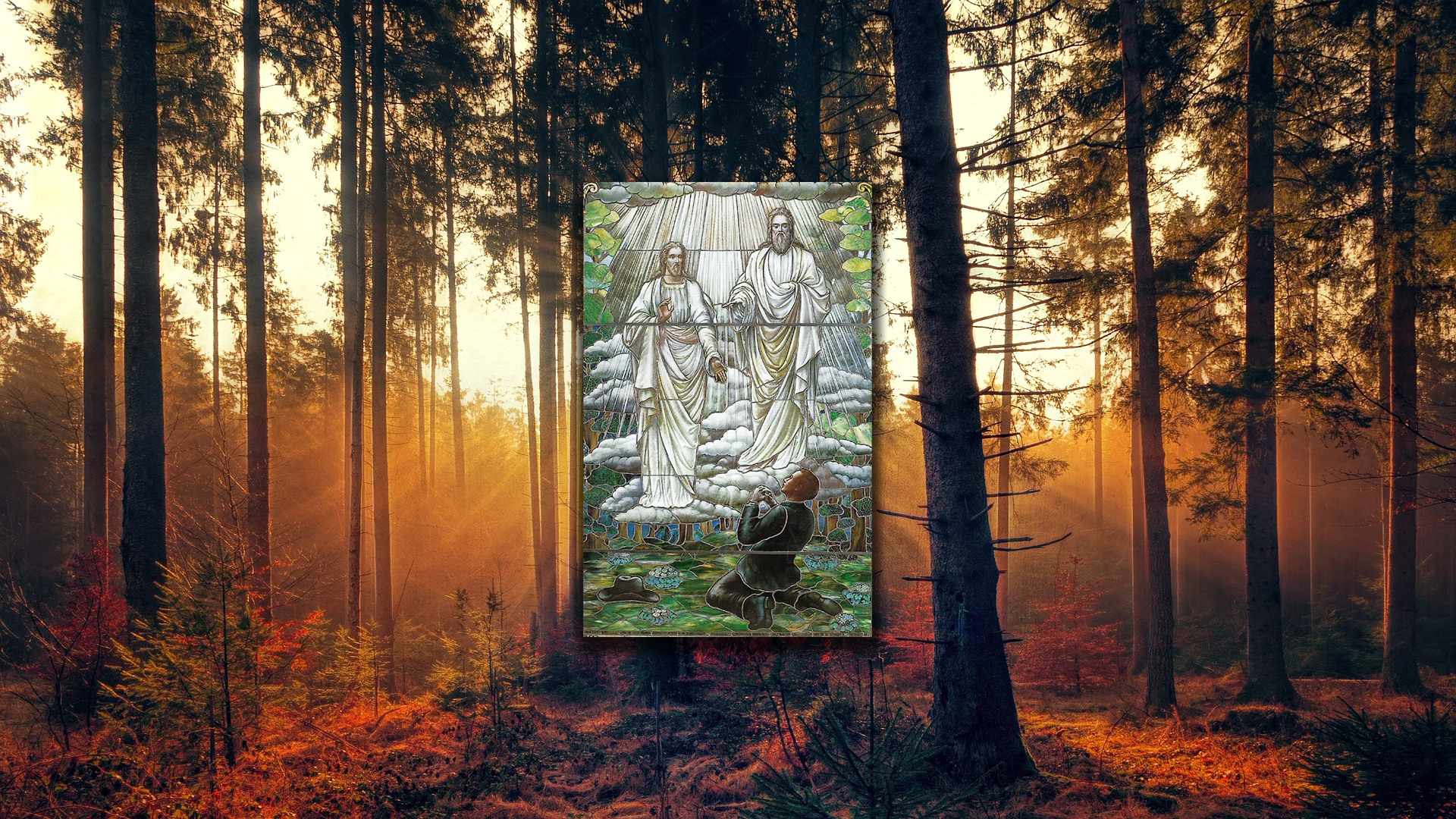
In Mormon Kabbalah, your relationship with God is very personal. No one else can create it for you. It cannot be inherited, borrowed, or performed outwardly without inward reality. True religion begins when you choose to turn your heart toward God. This is where the earlier teachings come into focus: the idea of teshuvah, returning to God, and the “birth of the soul” (Mosiah 11:186-188 [27:24-26]). As you begin to walk this path, you are invited to offer what scripture calls a broken heart and a contrite spirit (2 Nephi 1:71-72 [2:6-7]). This doesn’t mean shame or self-rejection. It means honesty. It means letting go of ego, pride, and the illusion that we are self-sufficient.
Every spiritual journey begins within.
In Kabbalistic language, your heart is a kli, Hebrew for “vessel.” That kli/vessel holds your desires, your intentions, your love. But when it is clouded by ego, fear, or selfishness, it cannot receive divine light clearly. So the first step is deeply personal: you begin to “clean the kli,” clean the “vessel” that holds your desire. Through faith in Jesus Christ, through repentance (teshuvah, returning back to God), and through sincere inner work, your heart becomes open. The Light of Christ, Ha’Or En Sof (Zenock 31:6-7), begins to enter more fully. This is what we earlier called the birth of the soul (Neum 15:18), when your spiritual and mortal self begin to unify into a singular being, whole and alive. And this part cannot be skipped. No community can do it for you, though one may should be supported in and by their community.
We Cannot Grow Alone
But here is where the paradox begins to unfold. If spiritual growth were only personal, you might imagine the ideal path is to withdraw, to go somewhere quiet, avoid the world, and focus only on your own enlightenment. Mormon Kabbalah teaches that this is incomplete. Why? Because isolation, if taken too far, actually feeds the ego rather than dissolving it. When we exist entirely alone, we become the center of our own universe again. There is no friction, no testing, no opportunity to truly love.
This is sometimes called the “illusion of the solitary saint,” the idea that holiness is achieved by withdrawing from humanity. But in this tradition, that illusion is gently rejected. You are not meant to escape the world. You are meant to heal it. And that cannot happen alone.
Light Must Flow Outward
As your inner vessel is cleansed and filled with divine light, something important happens: It begins to overflow. The Light of Christ, Ha’Or En Sof, is not meant to be stored or hidden. It is living, active, and outward-moving. If we try to keep it to ourselves, it stagnates. But when we allow it to flow outward, it becomes transformative, not just for us, but for others. This is where the principle of tikkun olam comes in: the repair of the world (Zenock 16:27-34). Your personal healing becomes the foundation for the healing of others. Your growth becomes a gift. And suddenly, spiritual life is no longer just about “me and God.” It becomes about us and God.
A Living Network of Light
In Mormon Kabbalah, community is not just a gathering of people, it is a living, spiritual network. Each person carries light. When those lights come together, something greater emerges. Think of a single candle in a dark room (video: Building Community in Mormon Kabbalah). It brings light, but only so much. Now imagine many candles together. The light multiplies. The darkness recedes more quickly. The space becomes warm, alive, and shared. And here is the most beautiful part: if one candle goes out, another can relight it. This is what community is meant to be.
We strengthen one another. We lift one another. We mourn with those who mourn and rejoice with those who rejoice. In doing so, we don’t just support each other, we become instruments of God’s light, the Ha’Or En Sof flows through us, out to heal the broken world. This is why service to others is not separate from serving God. As taught in the Book of Mormon, when we serve one another, we are in the service of God (Mosiah 1:49 [2:17]).
From the Heavens to the Earth
This balance between personal and communal growth is not random, it is built into the very structure of the spiritual path. As we explored earlier, Mormon Kabbalah teaches a top-down journey on the Tree of Life. We begin with God, with grace, revelation, and divine connection. But we do not stay there in isolation. Instead, we move downward, carrying that light into the world. At the base of the Tree is Malkhut: the Kingdom. While yes, the Kingdom of God is within (Luke 17:21), a kingdom does exist with just one person.
This is a profound teaching: the destination of spiritual growth is not private enlightenment. It is a shared transformation. It is community. It is Zion. Zion and the Spirit of “We.” Zion, in this framework, is not just a place. It is a way of being. It is what happens when a group of people who live in genuine love, unity, and mutual care. It is the embodiment of what some traditions call ubuntu: “I am because we are.”
This idea is simple but powerful: your joy is connected to others, your healing is connected to others, and your growth is connected to others. You cannot fully become who you are meant to be while ignoring the well-being of those around you. And so, Zion is built in two places at once: In the individual heart and in the shared life of the community.
Living the Paradox
Mormon Kabbalah invites you into a beautiful and challenging truth: You must walk your path personally, but you cannot walk it alone. You are responsible for your own heart, your own growth, your own transformation. No one can do that work for you. But as you do that work, your heart will naturally turn outward. That outward turning is not optional, it is the evidence that your inner transformation is real.
So the path looks like this: You turn inward to find God. You are changed by His light. Then you turn outward to share that light. And together, with others walking the same path, you begin to do something extraordinary: You bring Heaven to Earth, one soul at a time. It may seem like an impossible task, but it is as simple as living your life. I pray you will seek that Holy Light, the Light of Christ, Ha’Or En Sof. I pray you will live it, grow in it, and share it in your everyday walk in Christ.