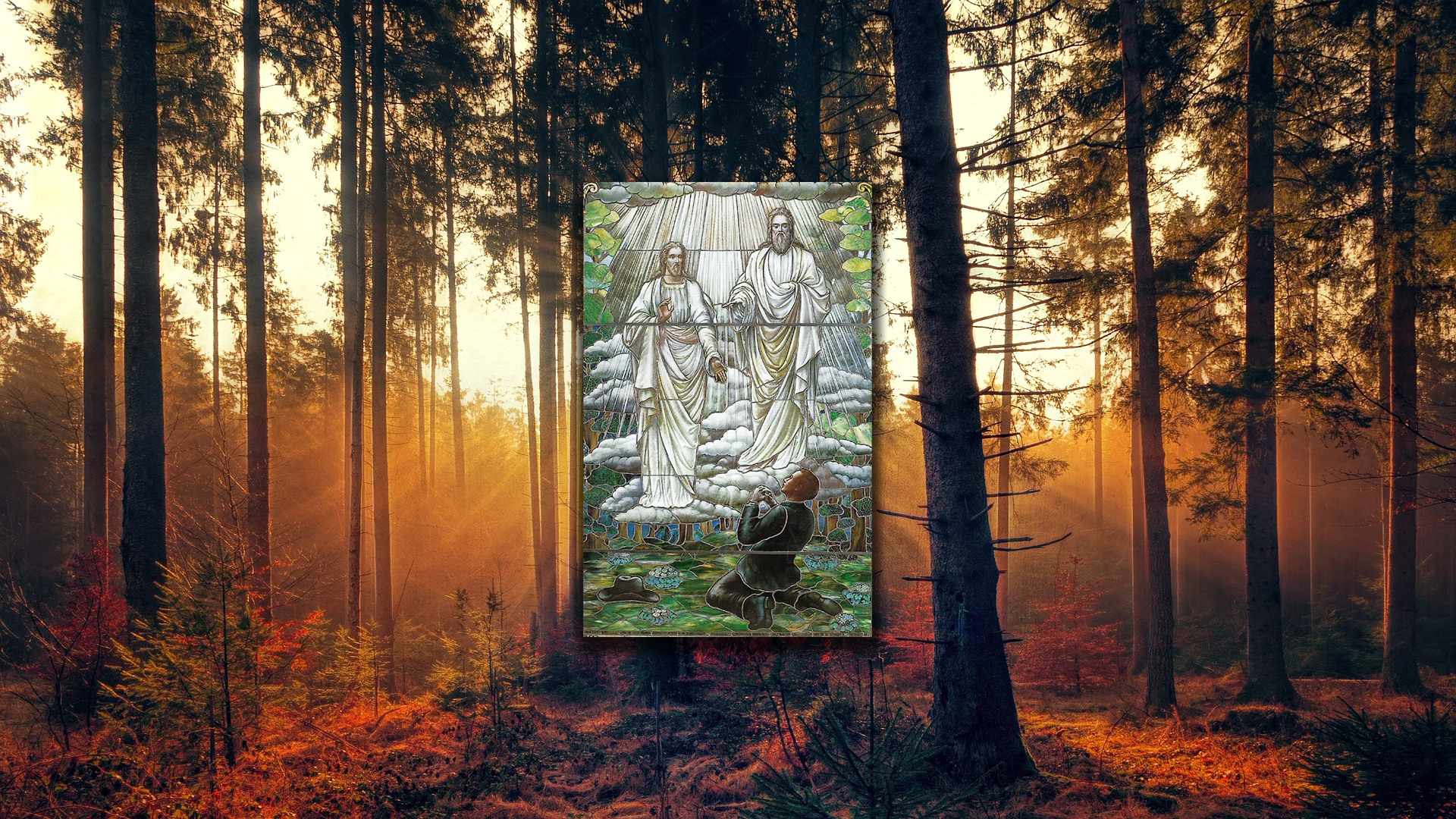
Therefore, I shall give unto thee my sword, that I will stretch out my hand and smite Egypt with the many wonders which I will do in the midst thereof; and after that Pharaoh will let you go, and I will give this people favor in the sight of the Egyptians.” –3 Moses 29-30
One thing I noticed while reading the scriptures growing up, which seemed to be bypassed or ignored at church, is that prophets and holy men in scripture carry around a surprising number of unusual objects. Moses had a staff, Lehi had the Liahona, Joseph Smith had a Seer Stone, etc. When I would ask about it, people would say that was how things were, if they answered at all. As a child, that pacified me, and I grew into a similar opinion, that they were just a subpart of the stories. The answer is actually much deeper, and far less strange, than it first appears.
If you have noticed them, or if you are noticing them now, you may be asking, What are they? Why are they in the stories? In the Fellowship tradition and within Mormon Kabbalah, these objects are sometimes understood through the idea of the chereb (Hebrew, חֹרֶב). In 4 Moses, from the Plates of Brass, starting in Chapter 30, Moses and Zipporah teach us about this concept, and how to make these items. These chapters helped me to understand these sacred tools a little better, proving they were more than idol curiosities. They were just as key to the stories as the people!
So what is a “chereb?” The term’s literal translation is “a cutting instrument (from its destructive effect), as a knife, sword, or other sharp implement” (Strong’s Concordance, Hebrew 2719). This word comes from the root “charab” (Hebrew, חֹרֶב), which was used in Genesis 8:13 to express being freed from the flood (Strong’s Concordance, Hebrew 2717). While the Hebrew word is often translated simply as “sword,” the deeper symbolic meaning points to something much broader: a sacred instrument, a tool through which divine power, revelation, or covenant connection is focused. In other words, the important thing is not the object/tool itself, but how it is used. The object is a reminder that heaven and earth are meant to work together. Or, to put it another way, God has always been willing to use very ordinary things for very extraordinary purposes.
Moses and the Staff
And the angel of YHVH said unto him: What is that in thine hand? And Moses answered him, saying: A rod.” –3 Moses 4:2-3
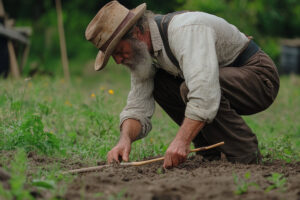
Let’s start our journey learning about the chereb with Moses himself. Most people imagine Moses carrying stone tablets dramatically down a mountain while thunder crashes in the background. And yes, according to both the Bible and the Plates of Brass, that happened.  But one of the most important sacred tools in Moses’ life was actually his staff. According to the scriptures, Moses stretched forth his staff over the Red Sea, and the waters divided so the children of Israel could cross safely out of bondage (3 Moses 20:16-23). The staff was not magical wood. It was a symbol of divine authority and covenant trust.
To be clear, the power was never in the stick. Remember, Moses was given the “sword,” the chereb, in 3 Moses 3:29, but this was not a literal sword. In the next chapter, 3 Moses 4:4, Moses is told to make his rod, his staff, the physical representation of the “sword,” or in modern terms the priesthood power, he had been given in the previous chapter. The power came through faith, obedience, and the presence of God working through a willing servant, mot the object itself. That pattern repeats constantly throughout sacred history.
The Strange Collection of Holy Objects
One of the beautiful things about Restoration theology is that God seems perfectly comfortable speaking through unusual means. Sometimes it is a rod, as we saw with Moses. Sometimes it is a stone, like we saw with Joseph Smith Jr. Sometimes it is a brass compass, like we saw with Lehi and Nephi. The scriptures of the Church of Jesus Christ in Christian Fellowship are filled with examples of this principle. We have already looked at Moses and his chereb, the staff. For the sake of brevity, we will look at just two more, the Liahona and the Seer Stone.
Lehi and the Liahona
And now, my son, I have somewhat to say concerning the thing which our fathers call a ball or director; or our fathers called it Liahona, which is, being interpreted, a compass; and the Lord prepared it. And behold, there cannot any man work after the manner of so curious a workmanship. And behold, it was prepared to show unto our fathers the course which they should travel in the wilderness; and it did work for them according to their faith in God.” –Alma 17:71-73 [37:38-40]
The story of the Liahona teaches us how the chereb functions. The Book of Mormon describes the Liahona as a brass ball with spindles that directed Lehi’s family through the wilderness (1 Nephi 5:11-12 [16:10]). But there was a catch. It only worked according to the faith and diligence of the people using it. Which, really, sounds spiritually familiar.
Most of us want revelation to operate instantly, like Wi-Fi. We pray once, wait three minutes, and then wonder why heaven has not downloaded the answer directly into our brains. But the Liahona teaches a different lesson. Guidance comes through relationship, patience, humility, and continued seeking. This again points to the power coming from within ourselves, not the object.
Joseph Smith and the Seer Stone
Joseph Smith Jr. would put the seer stone into a hat, and put his face in the hat, drawing it closely around his face to exclude the light; and in the darkness the spiritual light would shine.” –Avahr 29:2
The Restoration itself began with sacred instruments. Joseph Smith used a brownish Seer Stone during the translation process of the  Book of Mormon, reminding believers that revelation is not merely intellectual, it is experiential. To outsiders, this may sound unusual. But Mormon Kabbalah approaches these events differently. Rather than asking, “Was the object magical?” the better question becomes: “How does God teach human beings to recognize divine light?”
Physical objects often become teaching tools. They focus attention. They create sacred space. They remind the seeker to slow down, pray, listen, and discern. In Mormon Kabbalah, the Light of Christ is understood as a real spiritual presence flowing throughout creation. The “Olive Leaf” revelation teaches that this divine light “proceedeth forth from the presence of God to fill the immensity of space” (DoS 53b:20). Sacred tools are therefore not worshipped; they are symbols and instruments pointing the soul toward that greater Light.
A Modern Chereb
And I did teach the earth many of the secrets of her creation through my servants, Moses and Zipporah; therefore, study their words, and ye shall learn of these, the seer stone and the gazelem.” –Revelation received January 5, 2024
Back in the fall of 2023, I attempted the fast mentioned in 3 Moses 30:21-30. Later, in January of 2024, angels came to me in a dream and taught me how to make my own chereb, a type of urim and thummim. Later in that same month, I asked for and received a revelation to help me understand my dream.
 Within some expressions of Mormon Kabbalah, modern spiritual tools may include specially crafted staffs, a “rod of Aaron,” or, as the layperson would say, wands, used symbolically in prayer, meditation, blessing, or sacred study. No, this does not mean someone is attending Hogwarts Seminary, the symbolism is actually quite ancient. The wand connects back to Moses’ staff (3 Moses 4:2-17), and Oliver Cowdrey’s rod of Aaron (Avahr 18:13).
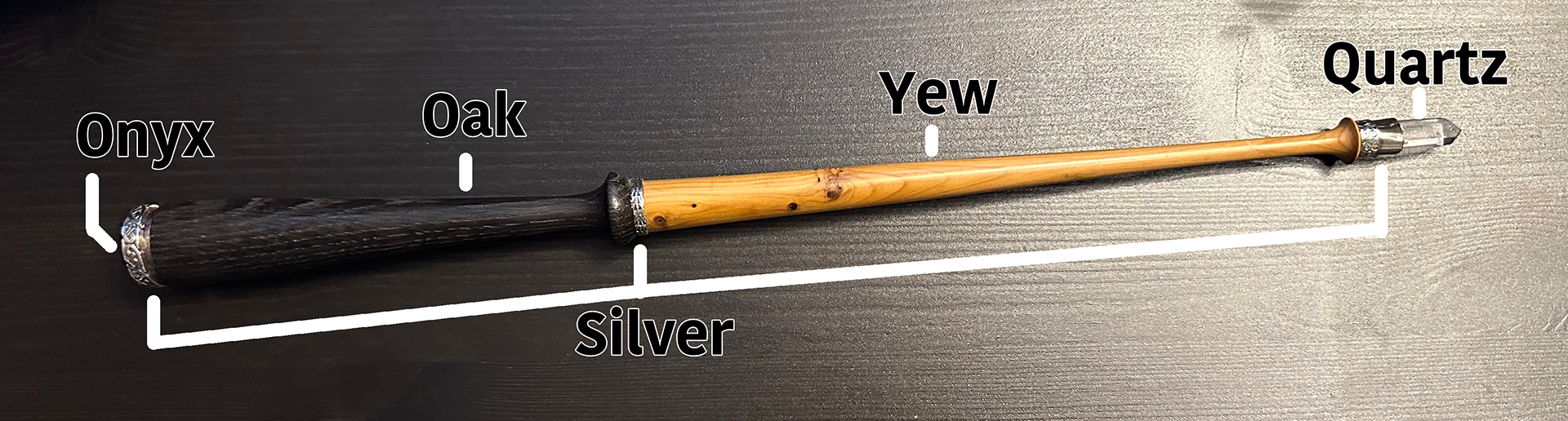
The urim and thummim wand I had crafted, for example, combines different materials that each represent spiritual principles:
- Head: Quartz (the urim) represents mercy, clarity, and provides the clarity needed for discerning light from darkness, serving as a point of focus for spiritual energy.
- Staff: Yew represents a bridge between life and death, resurrection, and eternal life, symbolizing the eternal nature of the soul and the continuity of the Priesthood.
- Handle: Oak symbolizes strength, endurance, and grounding/rootedness required to stand as a witness of God at all times.
- Butt: Onyx (the thummim) symbolizes justice, grounding and stability, providing a grounded foundation that ensures spiritual work is anchored in the reality of God’s Torah.
- Binding: Silver reflects purification, refinement, and purification, representing the purity of the work and the “refining fire” of the Spirit; just as silver is purified, so too must the Saints be refined as they enter into the work of the Restoration.
The purpose is not theatrical spirituality or mystical performance. The purpose is to remind the seeker that all creation points back toward God and that the physical world itself can become a teacher of spiritual truths. Mormon Kabbalah consistently teaches that matter and spirit are not enemies. Creation itself is sacred.
The Real Instrument Is the Heart
The scriptures repeatedly teach that sacred instruments only function properly when the heart of the user is aligned with God. The Liahona stopped working when faith failed. Priesthood power vanishes when pride entered the soul. Even the Iron Rod, the Word of God, only protects those willing to hold onto it through the “mists of darkness” (1 Nephi 2:67 [8:23]). This is why the scriptures constantly emphasize humility, charity, repentance, and spiritual discernment.
Moroni taught believers to “search diligently in the Light of Christ, that ye may know good from evil” (Moroni 7:18 [7:19]). The object is never the source of the miracle. God is. The chereb, whatever form it takes, is ultimately a reminder that we must seek the Light or Christ, remain humble, stay connected to God, and use every gift for mercy, wisdom, and healing.
Small Means, Great Things
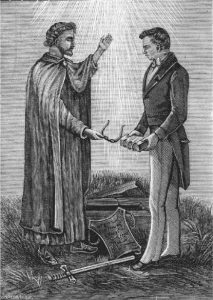
One of the great themes running through Restoration scripture is that God accomplishes extraordinary things through small and simple means. We read of a staff that parts the sea. There is a brass compass that guides a family across the wilderness. A stone is used to help bring forth scripture. Ancient records from metal plates speak again from the dust. And often, the Lord works through imperfect people who are simply willing to listen.
That may be the greatest lesson of the chereb. Not that holy objects are powerful in themselves, but that God delights in working through ordinary things, ordinary people, and willing hearts. And perhaps that is comforting because we do not need to possess ancient brass plates or prophetic staffs, yet every one of us can still seek the Light.
So if you feel called to make spiritual tools, a chereb of your own, the scriptures encourage you to do so. But please do not think these objects have any power. They are merely an outward expression of your inner faith. They are a bridge connecting us as the creation to the creator.
Appendix
If you’d like to know more about sacred instruments and the origins of the restoration, look for information on Hyrum Smith’s Mars Dagger and the Jupiter Talisman Joseph carried in his pocket until the day he was killed in “Early Mormonism and the Magic World View” by D. Michael Quinn.
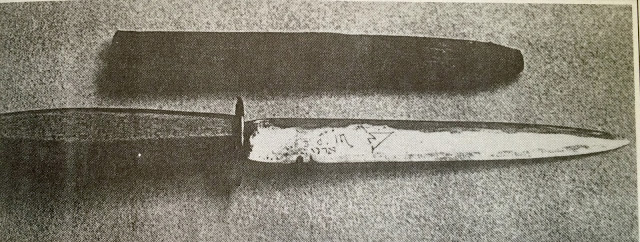
| Image Credit: Early Mormonism and the Magical World View
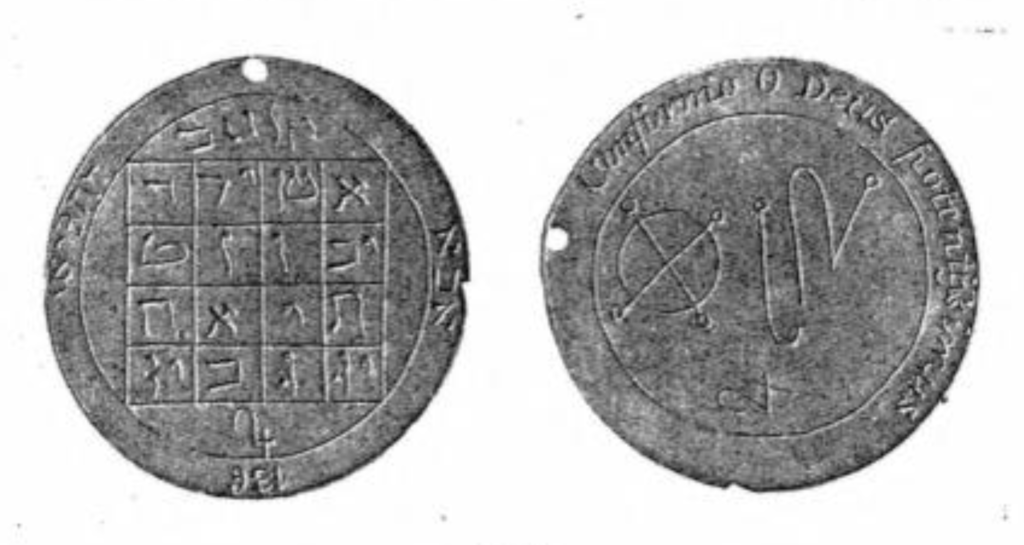
| Image Credit: Gilbert, W. Numismatic Chronicle and Journal of the Royal Numismatic Society, 1938, p. 274