And they had all things common among them; therefore, they were not rich and poor, bond and free; but they were all made free and partakers of the heavenly gift. ”
–4 Nephi 1:4 [1:3]
For many people, the word temple brings to mind sacred architecture, a beautiful building set apart from the ordinary world. Throughout scripture, mountains, sanctuaries, tabernacles, and holy cities have served as places where the Heavens and the earth meet. Yet if the story of the Restoration teaches us anything, it is that God never intended His presence to remain confined within walls of stone. The temple eventually leaves the mountains.
The true temple(s) walks into villages, entering homes where it/they sit(s) around dinner tables. Visiting hospitals, it/they embrace(s) the lonely, welcome(s) strangers, and feed(s) the hungry. True temple(s) comfort(s) those who mourn. The true temple(s) is/are not diminished when leaving sacred buildings. Rather, this fulfills its true purpose. The architecture of heaven becomes visible in ordinary life. The sacred geometry that once shaped holy places begins shaping holy people, and those people, in turn, transform the world around them. In Mormon Kabbalah, we understand this movement as the natural progression of the Restoration. The temple is not simply somewhere we go. It is something we gradually become.
Ordinances as Living Symbols
Know ye not, that so many of us as were baptized into Jesus Christ were baptized into his death? Therefore we are buried with him by baptism into death: that like as Christ was raised up from the dead by the glory of the Father, even so we also should walk in newness of life. For if we have been planted together in the likeness of his death, we shall be also in the likeness of his resurrection.”
–Romans 6:3-5
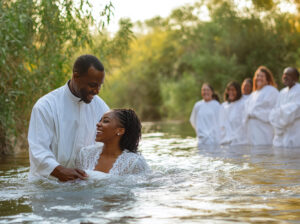
Religious ordinances are sometimes misunderstood as requirements to satisfy God or rituals performed merely because tradition demands them. The Mormon Kabbalist sees thing differently. To us, every ordinance is a living symbol. Each one teaches the soul something about its eternal identity. Rather than acting as spiritual checkpoints, ordinances become invitations into deeper communion with God and with one another. This starts with Baptism, which teaches surrender. Immersion beneath the water reminds us that the old self, the fearful, selfish, divided self, must give way to new life in Christ. Emerging from the water symbolizes not merely forgiveness but rebirth and participation in a new creation.
Likewise, confirmation teaches continual revelation. Receiving the Holy Spirit is not the conclusion of spiritual growth but its beginning. The gifts of the Spirit are invitation into an ongoing conversation with heaven, where wisdom, comfort, correction, and inspiration continue throughout life. The Sacrament of Communion is a sacred meal that teaches remembrance. Bread and wine (or their equivalents) remind us that divine life is received, not manufactured. Every meal shared in Christ’s name becomes an opportunity to remember His sacrifice and renew our covenant and commitment to support, sustain, and love one another.
Anointing teaches healing. Oil has long symbolized the presence of God’s Spirit. Whether offered for physical healing, emotional restoration, or spiritual strength, anointing reminds us that God delights in making whole what has been broken. As we see just in these few examples, each ordinance points beyond itself. The true purpose is transformation.
Covenant as Relationship
Now when I passed by thee, and looked upon thee, behold, thy time was the time of love; and I spread my skirt over thee, and covered thy nakedness: yea, I sware unto thee, and entered into a covenant with thee, saith the Lord God, and thou becamest mine. Then washed I thee with water; yea, I throughly washed away thy blood from thee, and I anointed thee with oil.
–Ezekiel 16:8-9
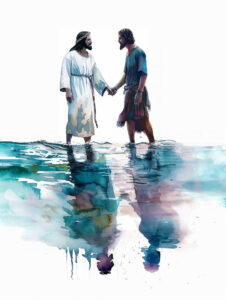
Modern culture often hears the word covenant and thinks “contract.” Biblically, covenant is something far richer, a covenant is the language of faithful relationship. This is why throughout scripture God compares our covenant with Him to a marriage, a promise that binds and creates families. God is continually inviting humanity into covenant, not to limit freedom but to deepen communion. When Israel stands at Sinai and declares, “All that YHVH has spoken we will do,” they are not entering a commercial agreement, they are entering a relationship built upon trust. Likewise, when disciples covenant with Christ, they are choosing a way of life centered on love, mercy, justice, and faithfulness.
The Mormon Kabbalist sees covenant as participation in divine life itself. Every covenant expands our capacity to reflect our original self, the Adam Kadmon. As we grow in the Grace of Jesus Christ, we gradually become a people whose promises resemble God’s own faithfulness. This covenant extends beyond individual spirituality, it shapes communities, families, congregations, neighborhoods, and eventually entire societies. This is because Zion itself is a covenant people.
The Table as an Altar
And they, continuing daily with one accord in the temple, and breaking bread from house to house, did eat their meat with gladness and singleness of heart, praising God, and having favor with all the people. And the Lord added to the church daily such as should be saved.”
–Acts 2:46-47
 One of scripture’s most beautiful images is remarkably ordinary: people eating together. Abraham welcomes strangers with bread, Moses and the elders dine before God, Jesus continually teaches while sharing meals, and the resurrected Christ breaks bread with His disciples. The Book of Mormon likewise presents sacred meals as moments of covenant renewal and unity. As Christ’s covenant people, a table becomes our altar. As Mormon Kabbalists, every shared meal possesses sacred potential. Hospitality becomes priesthood, preparing food becomes ministry, and conversation becomes fellowship. In this way, listening becomes worship as no one asks who deserves a seat. The table itself answers the question, as everyone is invited.
This vision stands in sharp contrast to systems built upon exclusion or status. The Kingdom of God expands not primarily through impressive institutions but through open tables. Perhaps one reason the earliest Christians transformed the world is that they consistently made room for one more chair. We must ask ourselves how we, in a world built on increasingly greater ways to connect yet that seems even further apart than ever, can build greater connections with others.
Gardens as Sacred Space
And they heard the voice of the Lord God walking in the garden in the cool of the day…
–Genesis 3:8
 The first temple was not constructed, it was planted. The Garden of Eden teaches that humanity’s earliest calling was not domination but stewardship. Adam was instructed to “dress and keep” the garden. The Hebrew verbs imply both cultivation and guardianship. Gardening then becomes priestly work. In Mormon Kabbalah, we embrace this idea deeply. To us, gardens are not merely sources of food. They become living classrooms where disciples learn patience, gratitude, humility, and dependence upon God.
Seeds remind us that growth often begins invisibly, roots teach stability, seasons teach hope, and harvest teaches generosity. The Universal Temple envisioned within Mormon Kabbalah naturally includes orchards, vineyards, medicinal gardens, and places where anyone may gather fruit freely. This reflects the abundance of Eden and anticipates the New Jerusalem, where the Tree of Life continually bears fruit for the healing of the nations. Growing food becomes an act of hope, and sharing food becomes an act of Zion.
Charity as Temple Work
Scripture consistently links authentic worship with care for the vulnerable. Isaiah asks:
Is not this the fast that I have chosen? to loose the bands of wickedness, to undo the heavy burdens, and to let the oppressed go free, and that ye break every yoke? Is it not to deal thy bread to the hungry, and that thou bring the poor that are cast out to thy house? When thou seest the naked, that thou cover him; and that thou hide not thyself from thine own flesh? Then shall thy light break forth as the morning, and thine health shall spring forth speedily: and thy righteousness shall go before thee; the glory of the Lord shall be thy reward.
–Isaiah 58:6-8
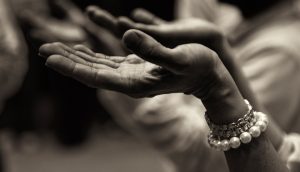 He answers, “Is not this the fast that I have chosen?” with feeding the hungry, clothing the naked, housing the homeless, and breaking every yoke. Likewise, James declares that pure religion consists in caring for widows and orphans (James 1:27). King Benjamin teaches that service to others is service to God (Mosiah 1:14 [2:17]). Jesus identifies Himself with “the least of these” (Matthew 25:40). We see this pattern appear again and again because charity is not separate from temple worship, rather it is temple worship. Every act of compassion tikkun olam, as each repairs the world.
What is Tikkun olam? It is us participating with God in healing creation, and in Mormon Kabbalah we embrace this principle wholeheartedly. When a hungry child is fed, the refugee is welcomed, the lonely neighbor is visited, the prisoner is remembered, and the enemy is reconciled, these are stones added to Zion. They are sacred architecture built not with granite but with grace.
Healing as Restoration
And what are my works? My works are that which restoreth all things, even from before the foundation of the world; My works are to heal this, the creation, to seek out the lost and the broken and offer them healing, my works are even as I have asked all ye to do in my name: Feed my sheep.”
–Doctrines of the Saints 133:22-23
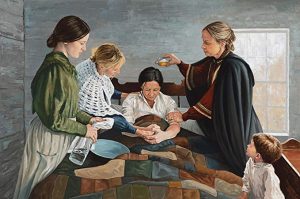
Healing occupies a central place throughout the ministry of Jesus. He heals bodies, minds, relationships, and communities. He restores dignity and hope to humanity. Sometimes the miracle is physical, sometimes emotional, or sometimes spiritual. Often all three together. Mormon Kabbalah understands healing as participation in the original harmony of Adam Kadmon. Illness, injustice, trauma, hatred, isolation, and despair all represent fractures within creation.
Healing is God’s work of restoration, and every disciple is called to participate. And please do not think that healing is reserved merely for specialists. Every act that restores life participates in God’s ongoing creation. One of the greatest misconceptions about holiness is that it exists only during extraordinary moments. And maybe this is the greatest mystery revealed by Mormon Kabbalah: The temple was never meant to remain behind sacred walls. It was always meant to walk into the world through ordinary people who have learned to love extraordinarily well.
The restoration of Adam Kadmon is not simply the restoration of the individual. It is the restoration of a people who increasingly reflect the character of Jesus Christ. As we gather in covenant fellowship, practice charity, care for creation, heal the broken, sing songs of hope, and welcome all to the table, we become living witnesses that heaven and earth are drawing together. This is the work of Zion, this is the work of the temple, and every disciple is invited to help build it. You, yes, you are invited!